
What is radiology?
Radiology is a medical specialty that combines medical imaging with a patient’s clinical history, examination, and laboratory data to diagnose disease, guide treatment, and sometimes treat disease through image-guided procedures.
What do radiologists do?
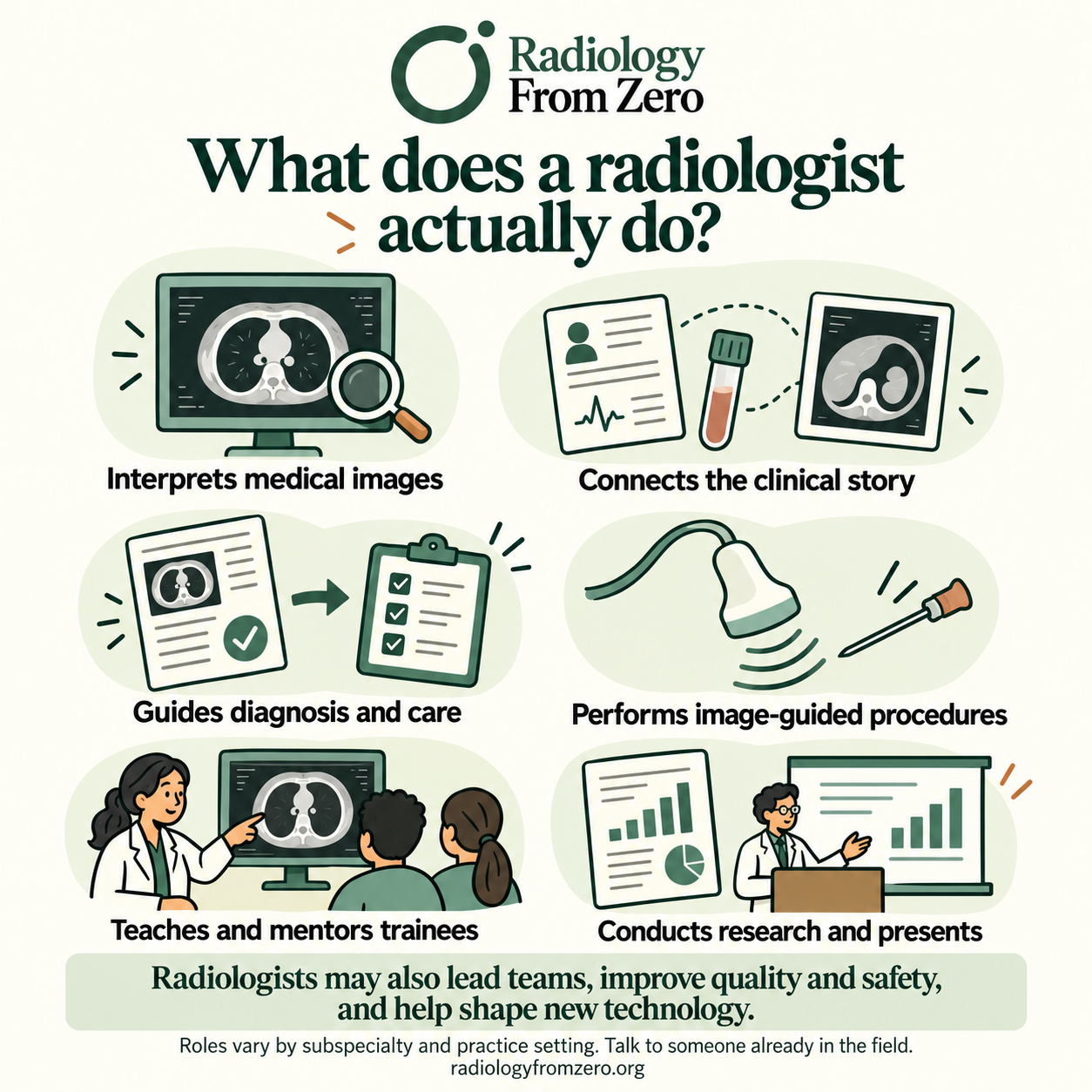
Radiologists do more than interpret medical images. They connect imaging findings with the clinical story, guide diagnosis and treatment, perform image-guided procedures, teach and mentor trainees, conduct research, present their work, lead teams, improve quality and safety, and help shape new technology.
Radiology paths and subspecialties
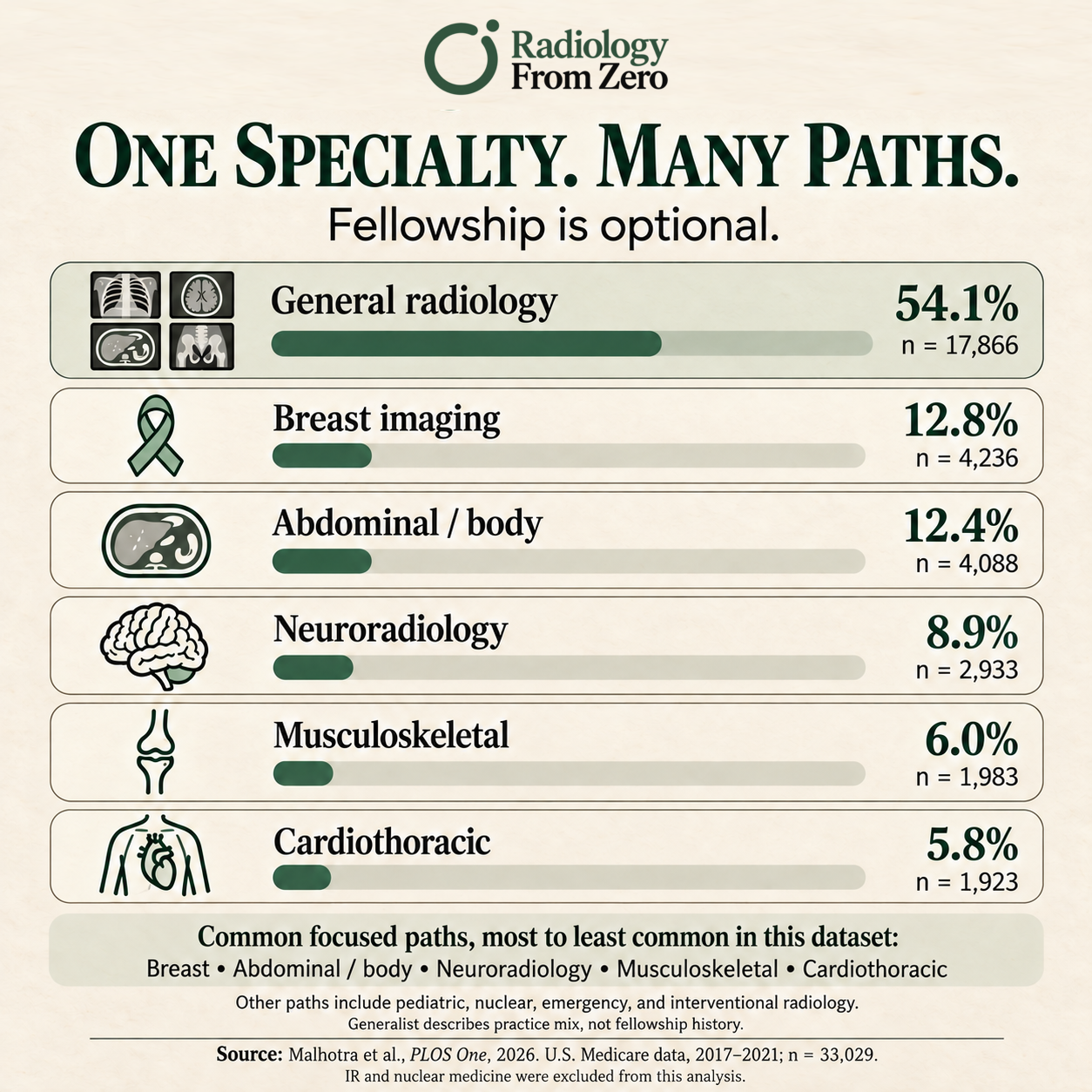
Fellowship is optional, and many radiologists maintain a broad general practice. In a 2026 Medicare analysis of 33,029 diagnostic radiologists, 54.1% practiced general radiology. Among the focused categories studied, breast and abdominal/body imaging were most common, followed by neuroradiology, musculoskeletal imaging, and cardiothoracic imaging. These categories describe predominant clinical work, not fellowship training; interventional radiology and nuclear medicine were excluded.
General radiology
Interprets a broad mix of studies across organ systems and may still include fellowship-trained radiologists.
Breast imaging
Uses mammography, ultrasound, and MRI, with frequent patient contact and image-guided biopsies.
Abdominal and body imaging
Focuses on abdominal and pelvic imaging, often with biopsy, drainage, and fluoroscopic procedures.
Neuroradiology
Evaluates the brain, spine, head, and neck and may include lumbar puncture or image-guided biopsy.
Musculoskeletal imaging
Covers bones, joints, muscles, and soft tissues, including injections, aspirations, and biopsies.
Cardiothoracic imaging
Focuses on the heart, lungs, mediastinum, and thoracic vessels using radiography, CT, and MRI.
Pediatric radiology
Adapts imaging and procedures for infants, children, and adolescents while limiting radiation.
Emergency radiology
Provides rapid interpretation for trauma, stroke, abdominal pain, and other urgent conditions.
Nuclear medicine
Uses radiopharmaceuticals for PET, SPECT, physiologic imaging, and selected targeted therapies.
Interventional radiology
Uses minimally invasive image-guided procedures such as embolization, thrombectomy, ablation, biopsy, and drainage.
Continue this pathway
Talk to someone in the field